

Thinking about hauling two trailers behind your vehicle? That’s double towing—and it’s not legal everywhere. Rules vary by state, and getting it wrong can lead to fines or worse.
This guide breaks it down clearly, so you’ll know exactly where it’s allowed and what to expect on the road.
What states allow double towing?
Double towing is allowed in many U.S. states like Texas, Michigan, and Utah but banned in others like New York and Hawaii. Check local laws before hitting the road.
Key Takeaways
- Double towing means hauling two trailers behind one vehicle.
- Not all states allow it—laws vary widely.
- Some states require a fifth wheel or special endorsement.
- Common length limits range from 65 to 75 feet.
- Banned states include New York, New Jersey, and Hawaii.
- Check your route before towing—assumptions can get you fined.
What Is Double Towing?

Double towing is when you hitch up two trailers to a single vehicle. Think a truck pulling a camper and a boat. Yep, it’s that kind of setup.
It’s legal in some states but totally banned in others. So, before you start playing train conductor with your weekend toys, check the local laws.
Not all vehicles are built for it either. You’ll need a rig with serious muscle and the right kind of hitch setup—gooseneck, fifth-wheel, or both.
And driving like this? Not a casual cruise. You’ll need sharper turns, longer stopping distances, and way more attention. No room for rookie mistakes.
Bottom line—double towing is legal sometimes, doable sometimes, but it’s not for every driver or state. Know your gear, know your route. Otherwise, you’re asking for a roadside headache.
Is Double Towing Legal in the United States?
Yeah, kind of. Double towing is legal in the U.S., but it’s not a free-for-all. It depends on the state you’re in.
Some states are chill with it, as long as you follow their specific rules—think total length limits, brake requirements, or license type.
Others? Total no-go. If you’re cruising cross-country, don’t assume what flies in Texas works in California.
Your cheat code: check each state’s DMV rules before hitting the road. It’s not thrilling reading, but it saves you a fat fine.
Also, keep your setup clean. Two trailers behind your ride look wild, but if one’s swaying like it’s dancing at Coachella, expect trouble.
Bottom line? Legal, yes—but only sometimes, and only somewhere. Check first, flex later.
States That Allow Double Towing
Double towing isn’t legal everywhere, but in a solid chunk of the U.S., it’s a green light—if you play by the rules. Think Midwest and South vibes, where hauling big is part of the lifestyle.
- Texas: Big state, big trucks. Texas is cool with double towing as long as your setup stays under 65 feet total.
- Florida: Yep, the Sunshine State allows it—but you’ve gotta be under 65 feet too. And yes, that boat and camper combo is fair game.
- California: Surprised? Cali says yes if your lead unit is a fifth wheel and the total rig doesn’t cross 65 feet.
- Michigan: This state lives for towing. They’ll even let you go over 65 feet with a special endorsement.
- Indiana: Double towing is legal, but there are length restrictions. Just keep it compact-ish and you’re golden.
- Missouri: Show-Me State? More like tow-me state. They’re down with doubles, just don’t get wild with the length.
- Utah: You can double tow here, but if you’re over 65 feet, you’ll need a CDL or special endorsement.
- Colorado: Allowed, but it’s all about configuration. You’ll need a fifth wheel up front and your total length needs to chill at 70 feet max.
- Nevada: Totally fine with it, as long as it’s a fifth wheel combo and your tow game is on point.
- Arizona: Similar story to Nevada—fifth wheel mandatory and a max length of 65 feet.
- Idaho: It’s legal, but you’ll need an endorsement. Don’t skip the training—it’s not just paperwork.
- South Dakota & North Dakota: These states are hauling-friendly. You’ll still need to mind weight and length caps, but they keep it chill.
- Montana: Legal and laid-back. As long as you’re safe and under 75 feet, you’re good.
States Where Double Towing Is Prohibited
Not every state’s cool with double towing. If you’re hauling two trailers, cross these off your road trip map: New York, New Jersey, and California.
In these states, it’s a hard no—no loopholes, no special permits. Their roads just aren’t built for that kind of trailer train.
Some other spots like Washington D.C. and Hawaii? Also not playing ball. Too tight, too urban, too much chaos.
If you’re passing through one of these zones, plan a workaround. Drop one trailer, find a local tow option, or reroute entirely.
It’s not the end of your road trip dreams. Just means you’ve gotta map smart and dodge the no-go zones.
Important Double Towing Regulations by State

Double towing rules? They’re all over the place. Some states are cool with it, others not so much. Here’s the breakdown so you don’t end up learning the hard way.
Texas, Utah, and South Dakota are green lights. You’re good to go as long as your total length doesn’t break their max limit. Usually, that’s around 65 to 75 feet.
California plays it safe. You can double tow, but only if the first trailer’s a fifth wheel. And yeah, you’ll need a special endorsement on your license.
Michigan? It’s a triple-tow playground. Snowmobiles, boats, campers—stack ’em. But they want everything spaced right and weight balanced.
Florida and New York don’t play. Double towing isn’t allowed at all. You’ll need to unhook that second trailer or find another route.
Arizona, Idaho, and Nevada say yes but want you to keep things tight. Stay under their length limit and keep your brake lights working. Obvious? Sure. But folks forget.
Colorado and Montana? They’re fine with it too, but good luck with those mountain roads. Better have brakes on all trailers unless you like white-knuckle driving.
Pro tip: Always check your state’s DMV site or handbook. Rules shift, and “I didn’t know” won’t fly if you get pulled over.
Safety Considerations for Double Towing
Double towing isn’t just about horsepower—it’s about control. If your setup sways like a drunk uncle at a wedding, that’s a red flag.
Make sure your trailer brakes are dialled in and your hitch game is tight. You want stability, not surprises.
Keep your total length legal, your mirrors wide, and your turns patient. Jackknife once, and it’s game over.
Oh, and don’t flex with extra speed. Two trailers mean double the risk if things go sideways.
Tips for Double Towing Safely
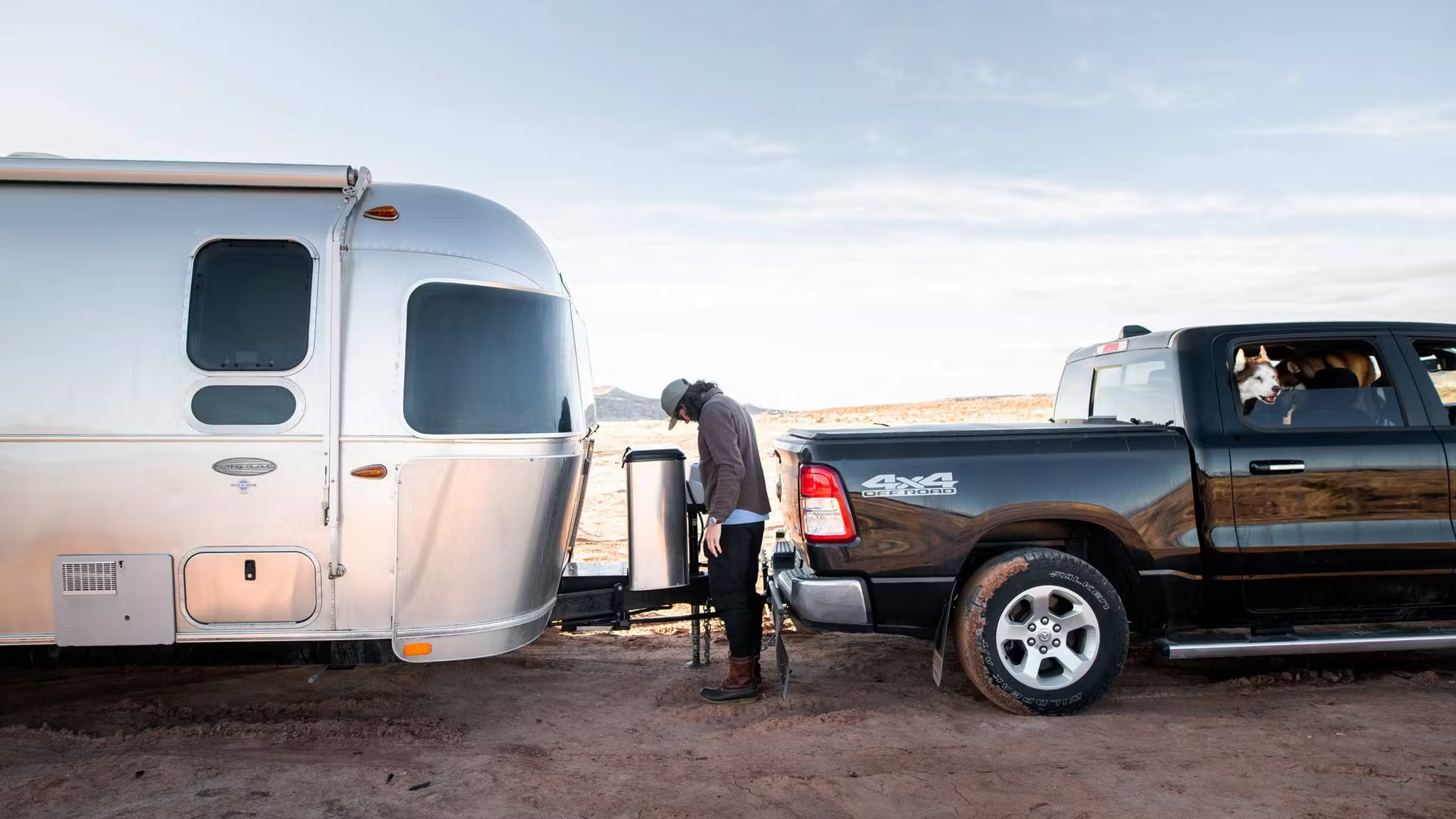
First off, don’t rush the hookup. Lock in your hitches, double-check your chains, and make sure your lights actually light up. That’s the baseline.
Weight matters. Keep the heaviest trailer closest to your vehicle. Otherwise? You’re basically asking for a fishtail fiesta.
Don’t wing it on braking. Two trailers mean more momentum, and your regular stop distance won’t cut it. Ease into brakes, keep your distance.
Wider turns? Mandatory. You’re driving a train, not a go-kart. Hug those corners tight or you’ll be curb-kissing.
Last tip? Skip the late-night DIY experiments. Practice in daylight, somewhere open. It’s not a flex if you jackknife in front of the neighbors.
Frequently Asked Questions
1. Is double towing legal in every state?
Nope. Some states are cool with it, others shut it down completely. It’s a patchwork of rules, so check local laws before hitching up.
2. Do I need a special license for double towing?
Sometimes. States like California and Texas might ask for a special endorsement. Don’t wing it—check your state’s DMV site.
3. What’s the max length allowed for double towing?
Usually around 65 to 75 feet, but that varies by state. Stay under or risk a hefty fine.
Conclusion
Double towing rules? They’re a patchwork. Some states are cool with it, others will slap you with a fine.
Before you hit the road, check the laws in every state you’re crossing. A quick call or Google search could save you a pricey mistake.
And if you’re ever unsure, play it safe—drop the second trailer or go solo. Better to roll clean than explain your setup on the side of the highway.