
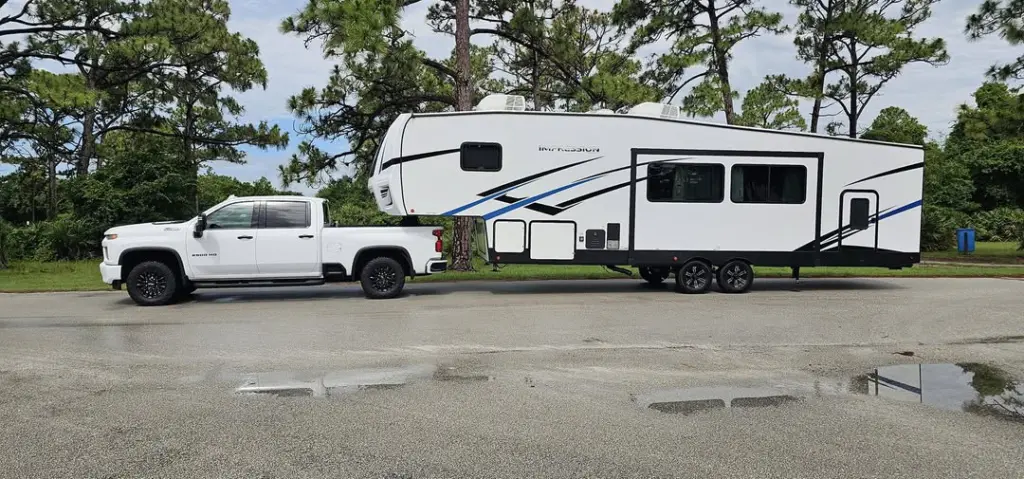
Towing a trailer that’s not level might not seem like a big deal—but it can cause serious issues. From poor handling to uneven tire wear, small tilts can lead to big problems.
In this guide, we’ll explain why trailer level matters and how to get it right every time.
Should a trailer be level when towing?
Yes, a trailer should be level when towing. A tilted trailer affects braking, handling, and tire wear, making the drive unsafe and unstable.
Key Takeaways:
- A level trailer improves safety, stability, and fuel efficiency.
- Nose-up towing can lead to poor braking, sway, and tire wear.
- Use a drop hitch or adjust load placement to fix tilt.
- Slightly nose-down is better than nose-up, but level is best.
- Always check on flat ground with a bubble level or visual check.
Why Trailer Level Matters
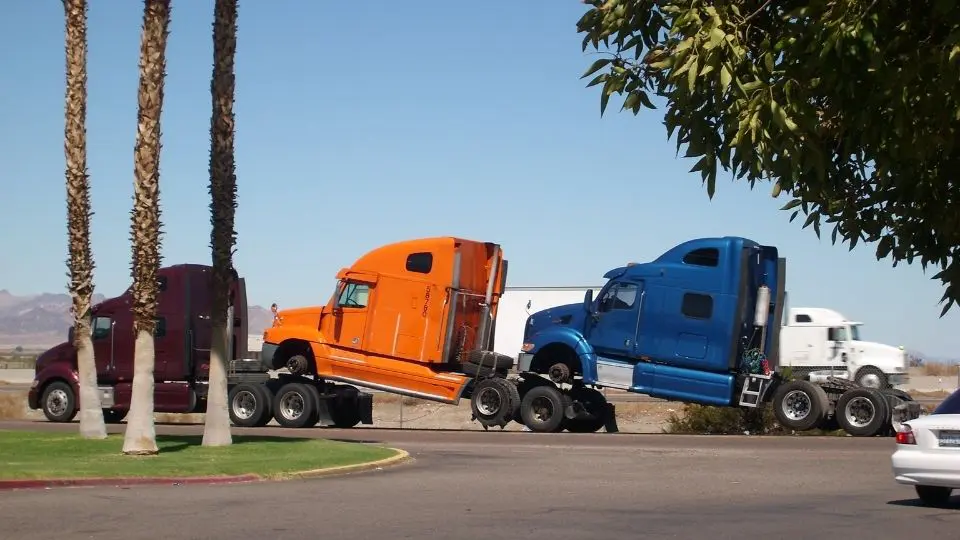
A level trailer isn’t just a flex for neat freaks—it’s a cheat code for safer, smoother towing. When your trailer tilts up or down, weight shifts in weird ways.
That can mess with your brakes, steering, and suspension. Plus, uneven trailers put extra stress on your hitch and tires.
Worse? It can make your ride fishtail like it’s auditioning for Fast & Furious. Nobody wants their weekend wrecked by trailer drama.
Keep it level and you’re not just riding smoother—you’re protecting your gear, your truck, and your ego. It’s the low-key upgrade most folks ignore… until they white-knuckle down the freeway.
What Happens If Your Trailer Isn’t Level?
If your trailer’s nose is too high or low, you’re asking for trouble. Weight shifts weirdly, and suddenly your brakes aren’t doing what they should.
Your tires wear unevenly. Your ride gets bouncy in a bad way, like hitting every pothole with extra flair.
Steering? Sloppy. Stopping? Sketchy. It’s like driving a shopping cart with one wonky wheel.
Gas mileage takes a hit too. And forget smooth cruising – your suspension’s doing overtime.
The fix? Adjust your hitch height or use a drop hitch. A level setup means safer hauls and way fewer headaches.
How to Check If Your Trailer Is Level
Pull up on flat ground. That’s your stage. Uneven driveways throw everything off.
Grab a simple bubble level and place it on the trailer frame, not the floor inside. The frame doesn’t lie.
Check front to back first, then side to side. If the bubble’s dead center both ways, you’re golden.
Still off? Adjust your hitch height or reposition your load. Most folks overlook weight placement – don’t be that guy.
Lastly, step back and eyeball it. If it looks off, it probably is. Trust your gut and the level.
Tips to Make Your Trailer Tow Level
First up, get the right drop hitch. It’s not just about eyeballing it—measure your tow vehicle’s hitch height and your trailer’s coupler height when level.
Next, load smart. Keep the weight balanced, with about 60% of it in front of the axle. Too much at the back and your trailer’s doing the cha-cha.
Tire pressure matters too. Uneven tires = uneven ride. Check them before every haul.
If you’re still off? A weight distribution hitch might be your cheat code. It evens things out and keeps things chill on the road.
Finally, double-check it all on level ground. Gravel driveways don’t count. A quick look from the side can tell you if you’re good to go or need to tweak.
Basically, your trailer should ride like it’s on rails—not like it’s bouncing to a bad beat.
Is Slightly Nose-Down or Nose-Up Okay?
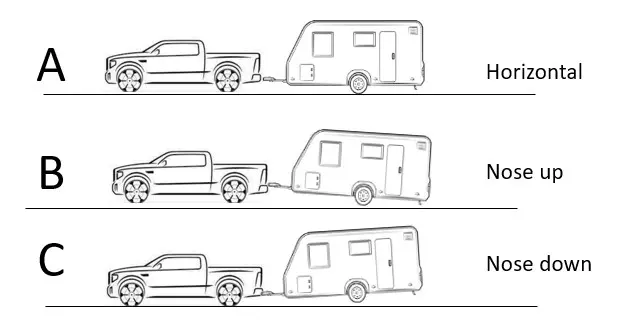
A little nose-down? That’s fine. Actually, it’s better than nose-up.
Slightly front-heavy helps with stability. Your trailer stays planted instead of swaying like it’s in a wind tunnel.
But nose-up? That’s where things get sketchy. Your rear suspension sags, your headlights blind everyone, and braking goes out the window.
Aim for level, sure. But if you’re stuck between a tiny nose-up or nose-down, tilt forward just a touch. It’s the safer cheat code.
Should You Adjust for Load Weight?
Absolutely. Load weight isn’t just about numbers, it changes how your trailer rides. A heavy back end can tilt the trailer up front, messing with control and braking.
If your trailer’s squatting or nose-diving, you’re not towing smart. Shift your gear, move weight forward, and keep it balanced.
The cheat code? Keep about 60% of the weight in front of the axle. Too far back and it’s a swaying city. Too far forward and you’ll overload your hitch.
Use a drop hitch if needed to bring the whole setup back to level. It’s not just a flex—it’s a safety move.
When to Get Professional Help
If your trailer’s tilting like it’s trying to drift, it’s time to call in a pro. A steady lean can wreck your tires, mess with your steering, and ruin your weekend.
Don’t second-guess it if you’ve adjusted the hitch height, redistributed the load, and it’s still off. Shops that handle trailer setups will eyeball issues in minutes and get you back to smooth towing—no guesswork, no weird swaying on the highway.
Frequently Asked Questions
1. Does the trailer really need to be perfectly level?
Yeah, pretty much. If it’s tilted, you’re risking sway, uneven tire wear, and sketchy handling. Keep it level and ride smoothly.
2. What happens if it’s nose-up or nose-down?
Nose-up messes with braking. Nose-down puts too much pressure on the hitch. Either way, not a flex.
3. How can I tell if it’s level?
Use a basic level tool or just eyeball the fender clearance. Front and back should sit even. No rocket science here.
Conclusion
Yeah, your trailer should be level. No debate. If it’s tilted, you’re messing with balance, braking, and vibes. Keep the front and back even so your ride stays smooth, your tires wear right, and your brakes don’t freak out.
Use a drop hitch if things aren’t lining up. It’s like wearing the right shoes—tiny tweaks, big difference. Get it dialed in, and your haul won’t just look pro, it’ll feel tight on the road too.