
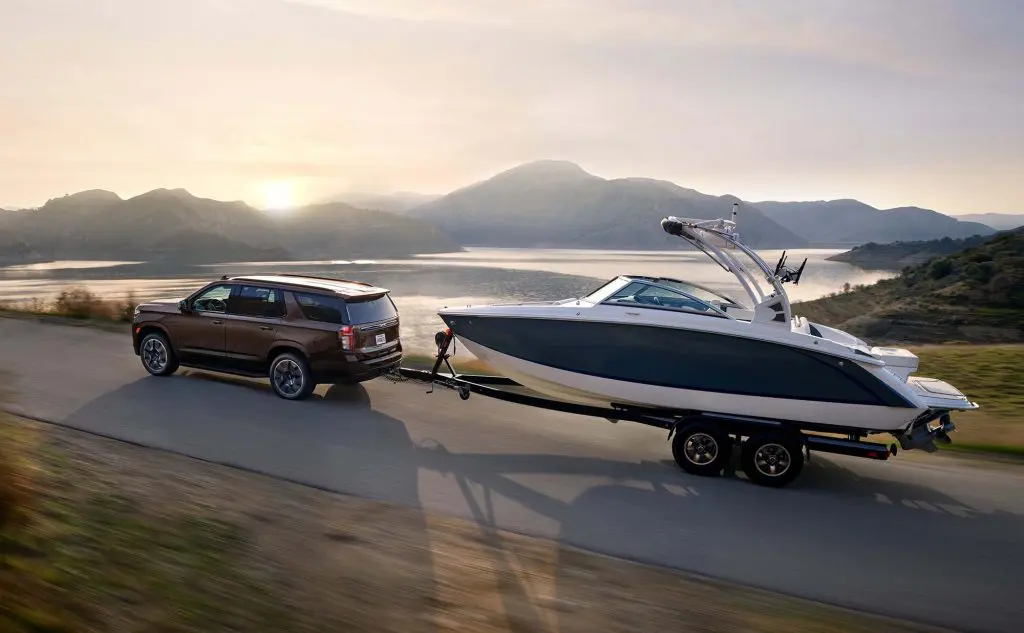
Towing a boat, whether for a weekend trip to the lake or transport to storage, requires careful planning. Using the wrong vehicle or exceeding its towing capacity can lead to costly repairs and dangerous situations on the road.
However, towing a boat requires careful planning, especially when it comes to determining your vehicle’s towing capacity.
Using the wrong vehicle or exceeding its towing capacity can lead to dangerous situations on the road and damage to your vehicle.
How much towing capacity do I need for a boat?
Before towing a boat, it’s important to understand how to calculate towing capacity accurately. Start by adding up the weight of the boat, trailer, fuel, and any gear. Your vehicle’s towing capacity should be at least 10–15% higher than this total to maintain a safe buffer and ensure smooth towing performance.
Key Takeaways: How Much Towing Capacity Do I Need for a Boat?
- Total Towing Load: Combine the boat’s weight, trailer weight, fuel, and gear to calculate the total load.
- Know Your Vehicle’s Limits: Choose a vehicle with a towing capacity that exceeds the total load by at least 10–15%.
- Prepare for Safe Towing: Use trailer brakes for heavier loads and ensure your vehicle is equipped with a towing package.
- Use a Safety Margin: Avoid exceeding your vehicle’s towing capacity to prevent mechanical damage and unsafe driving conditions.
- Follow Towing Tips: Balance the boat on the trailer, inspect equipment before towing, and drive cautiously to avoid swaying or instability.
Check your vehicle’s towing specifications in the owner’s manual or door frame label, and consider a margin to account for wear and performance.
For heavy loads or long-distance transport, professional towing services like Long Distance Towing can ensure safe and efficient handling. We offer reliable boat towing services with reasonable pricing.
In this guide, we’ll break down the key factors that influence towing capacity for boats, provide steps to calculate the required towing capacity, and offer tips to tow safely. Whether you’re a boating enthusiast or towing for the first time, this guide will help you make an informed decision.
What Is Towing Capacity?

Towing capacity is the maximum weight a vehicle can tow safely, including the boat, trailer, fuel, and gear. Exceeding this limit can lead to reduced braking performance, mechanical failure, and loss of vehicle control, increasing the risk of accidents.
Key Factors That Determine Towing Capacity for a Boat
Several factors influence how much towing capacity you need for your boat:
Boat Weight
The dry weight of the boat is the starting point. This is the weight of the vehicle without any fuel, gear, or passengers. You can typically find this information in the owner’s manual or manufacturer specifications.
Trailer Weight
The trailer’s weight is a significant part of the towing load. For example:
- Small boat trailers typically weigh 500–800 pounds.
- Medium-sized trailers for fishing or speedboats can weigh 1,000–1,500 pounds.
- Larger trailers for sailboats or cabin cruisers can exceed 2,000 pounds.
Additional Gear and Fuel
Items such as coolers, fishing equipment, water, and fuel contribute to the total weight. A gallon of fuel weighs approximately 6.3 pounds, which can quickly add up.
Gross Combined Weight Rating (GCWR)
The GCWR is the maximum allowable weight of your vehicle, passengers, cargo, and the towed load. This rating is critical in ensuring that your vehicle operates safely while towing.
How to Calculate the Towing Capacity Needed for Your Boat
To determine the towing capacity required for your vehicle, follow these steps:
Calculate the Total Load
Add the following components:
- Boat dry weight.
- Trailer weight.
- Fuel weight (gallons × 6.3 pounds).
- Gear and cargo weight.
For example, if your boat weighs 2,500 pounds, your trailer weighs 1,000 pounds, and you’re carrying 100 pounds of gear and 20 gallons of fuel, the total weight is:
2,500 + 1,000 + (20 × 6.3) + 100 = 3,726 pounds
Check Your Vehicle’s Towing Capacity
Review your vehicle’s owner’s manual or look for a sticker inside the driver’s side door frame that lists the maximum towing capacity.
Account for a Safety Margin
Keeping your load at least 10–15% below your vehicle’s towing capacity allows for better performance, reduces strain on your vehicle’s engine and brakes, and accounts for unexpected variables like strong winds or hilly terrain.
Matching the Right Vehicle to Your Towing Needs
Not all vehicles are built for towing heavy loads. Here’s a breakdown of vehicle types and their typical towing capacities:
- Sedans and Small SUVs (1,000–3,500 pounds): Suitable for personal watercraft (PWC), small fishing boats, or lightweight sailboats.
- Midsize SUVs and Pickup Trucks (3,500–7,000 pounds): Ideal for medium-sized speedboats, pontoon boats, or bass boats.
- Full-Size Trucks (7,000–12,000+ pounds): Designed for larger vessels like cabin cruisers, sailboats, and deck boats.
Midsize SUVs and Pickup Trucks
- Towing Capacity: 3,500–7,000 pounds
- Suitable for: Medium-sized fishing boats, small speedboats, and pontoon boats
Full-Size Trucks
- Towing Capacity: 7,000–12,000+ pounds
- Suitable for: Large boats, including sailboats and cabin cruisers
Ensure your vehicle has the appropriate vehicle towing package, which includes features like a heavy-duty hitch, improved suspension, and enhanced cooling systems.
Towing Safely: Tips for Boat Owners
Towing a boat requires extra precautions to ensure safety on the road. Follow these tips:
Distribute Weight Evenly
Ensure the boat is centered and balanced to tow your boat and trailer. An uneven load can cause swaying and instability.
Perform a Pre-Tow Inspection
Before your tow vehicle like a boat, conduct a thorough pre-trip inspection:
- Trailer Lights: Ensure all lights are functional and compliant with local regulations.
- Tire Pressure: Check both the vehicle and trailer tires for proper inflation.
- Hitch Connection: Verify that the hitch is securely attached and safety chains are in place.
- Brakes: Test the trailer brakes, especially for loads over 3,000 pounds.
Use Proper Trailer Brakes
For loads exceeding 3,000 pounds, trailer brakes are often required by law. These improve stopping power and reduce stress on your vehicle’s brakes.
Drive Cautiously
Maintain a steady speed, avoid sudden braking, and give yourself extra space to stop or turn. Keep an eye on your mirrors to monitor the trailer.
Check Local Towing Regulations
Laws regarding trailer lights, safety chains, and brakes vary by state. Ensure you’re compliant to avoid fines or accidents.
Preventive Measures to Protect Your Vehicle
Overloading your vehicle can lead to costly repairs and safety hazards. Follow these preventive measures:
- Upgrade Your Vehicle If Needed: Exceeding your vehicle’s towing capacity can lead to costly repairs, such as transmission failure or engine damage. For larger boats, consider investing in a full-size truck with a towing package to ensure safe and efficient transport.
- Use a Weight Distribution Hitch: For heavier loads, a weight distribution hitch can improve stability and reduce strain on your vehicle.
- Regular Maintenance: Ensure your vehicle’s brakes, suspension, and engine cooling systems are in good condition for towing.
Frequently Asked Questions:
1. How do I calculate the towing capacity needed for my boat?
Add the boat’s dry weight, trailer weight, fuel weight (gallons × 6.3 pounds), and gear. Ensure the total is at least 10–15% below your vehicle’s towing capacity to maintain a safety margin.
2. Can I tow a boat with a sedan?
Small boats or personal watercraft (PWC) can be towed by sedans, provided the total weight doesn’t exceed the sedan’s towing capacity (1,000–3,500 pounds).
3. What happens if I exceed my vehicle’s towing capacity?
Exceeding towing capacity can cause mechanical damage, reduce braking performance, and lead to dangerous driving conditions.
Conclusion
Determining the right towing capacity for your boat involves calculating the total load and choosing a vehicle that can handle it safely.
By following the guidelines in this article and prioritizing proper towing practices, you can enjoy a safe and stress-free experience. For heavy loads or long-distance trips, professional services like Long Distance Towing provide peace of mind with expert handling and transparent pricing.
By calculating the total load and comparing it to your vehicle’s towing capacity, you can ensure a safe and stress-free towing experience.
Always prioritize safety by leaving a margin below your vehicle’s maximum towing capacity and following proper towing practices.